
.png)
One of the largest projects that the plan broke down was transportation. The ideas were large and costly. Burnham dedicated a great part of his plan to remapping the city with a focus on how people and freight interacted.
Last week we established that the plan of Chicago was ambitious to say the least. It intended to reshape every aspect of civic life, targeting what was believed to be the reason for the disorder and general lack of will to live amongst the city’s population. One of the largest projects that the plan broke down was transportation. The ideas were large and costly. Before we dive into what the richest thought the city should look like, it’s important to understand the extent of the issues the city faced.
Following the Great Chicago Fire of 1871, Chicago was rebuilt haphazardly. Growth was fast, messy, and driven by urgency, as a booming population demanded buildings almost as quickly as they could be constructed. By the time Chicago was selected as the host of the World’s Columbian Exposition, railways had spread west and our city was considered the next biggest thing. Rail lines were being built to accommodate the sweeping industrial growth. At the opening of the World’s Fair, Chicago was by definition Gilded; or better yet, plastered.
Once the plans for the park systems were laid out, Burnham dedicated a great part of his plan to remapping the city with a focus on how people and freight interacted. Chicago was importing and exporting cattle, wheat, lumber etc. from all over the country. The streets of the loop were considered some of the busiest in the country.
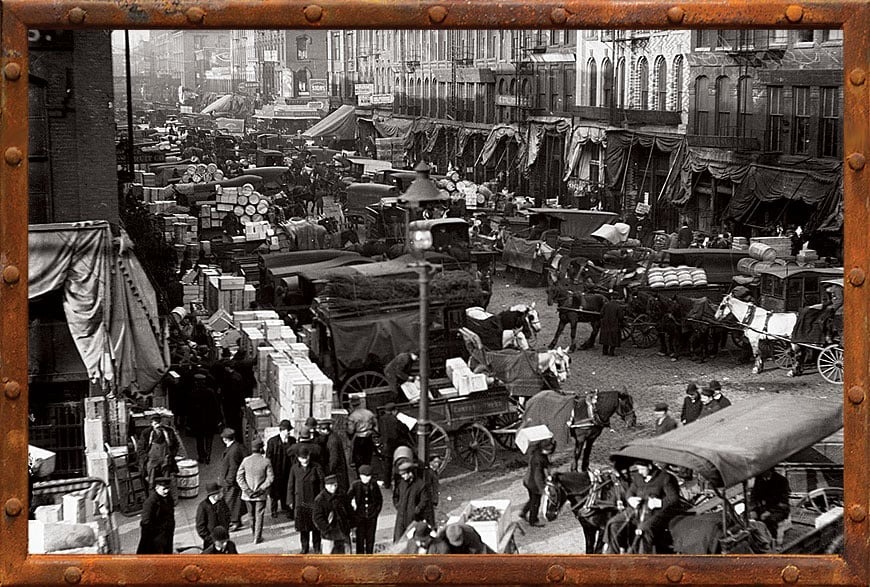
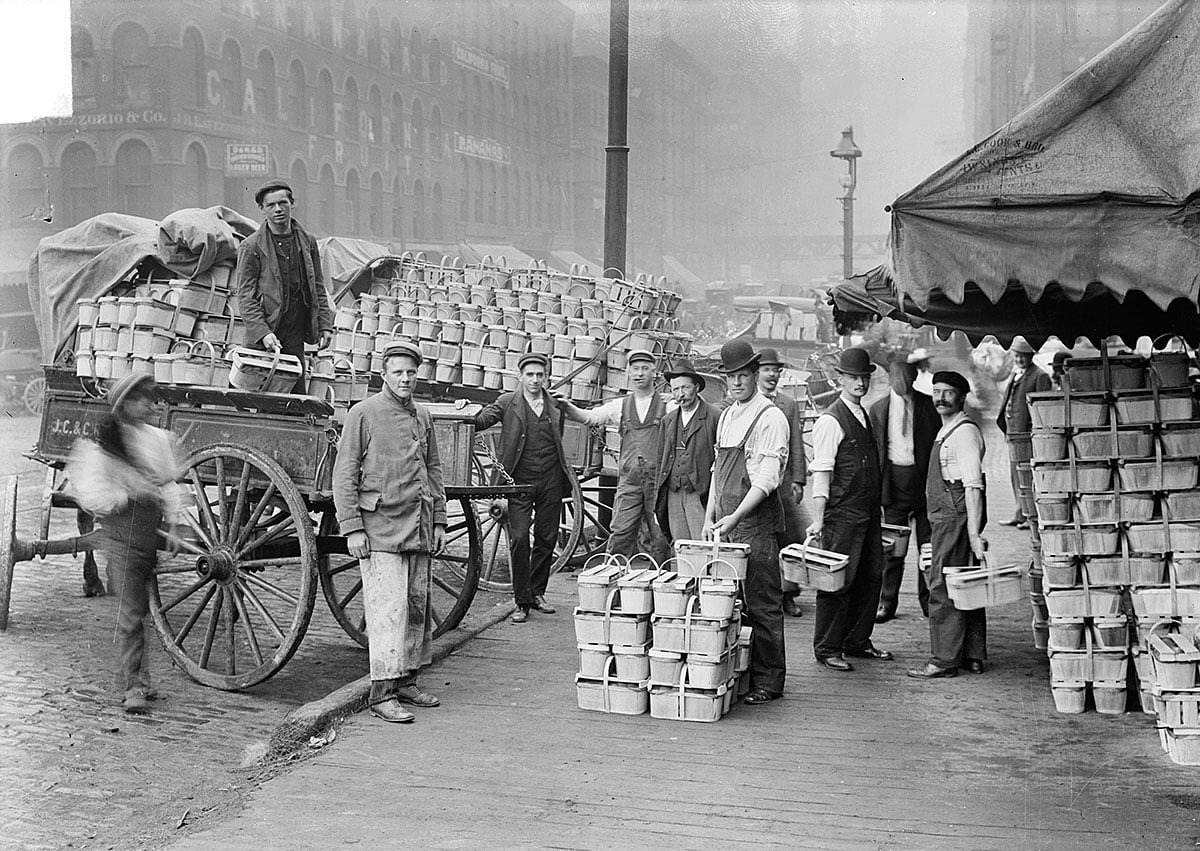
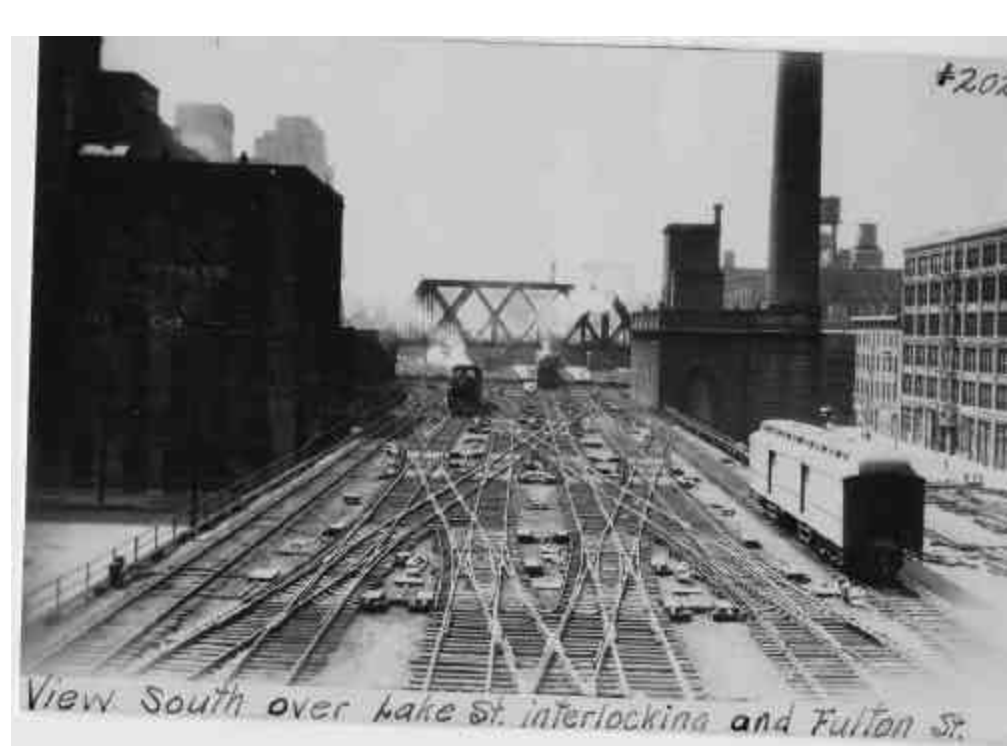
There was an urgent need to clearly separate people from the freight that moved through the city. The Plan suggested three main action items; widening of avenues, building up of a city civic center, creating a depot for all rail cars that otherwise would park around the city blocking other trains. The tracks were arguably the most important since the way they had been laid out caused traffic and avoidable accidents. Different rail companies were laying down their own tracks and The Plan suggested that it was now time for them to use the same tracks in a unified system. .
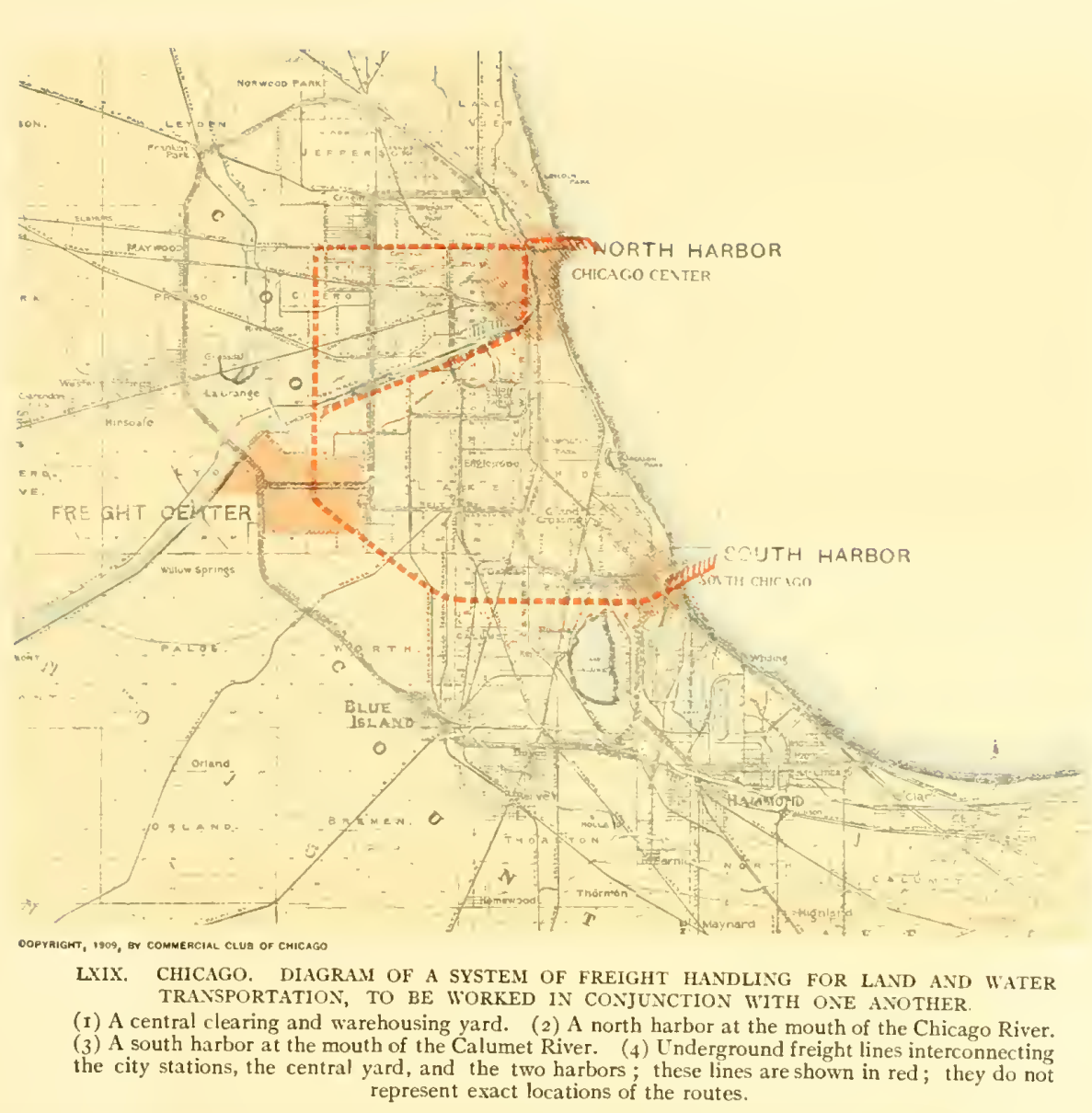
There was a clear need for centralized hubs where wholesalers could exchange goods, it just could not be in the Loop. With nearly 95% of Chicago’s freight arriving by rail and only about 1% by boat, the proposal called for a massive warehouse system built around train access. Freight cars would pull in, unload quickly, and be sent right back onto the tracks to keep traffic moving. The warehouse itself would serve as a shared storage space for merchants across the city, streamlining both distribution and logistics. Buyers would be given access to Water Street (now Wacker Driver) between the hours of 1 and 7 in the morning to complete their purchasing and hauling of product. This was meant to reduce congestion in the Loop and the central business district.

The Plan also suggested an overhaul of the “L”. The Elevated Loop system was originally built in 1892 for the World’s Fair, but it needed a revamp. There were examples of viaducts, and physically elevating the train tracks, locations for stations that allowed easier commuter entrance, wider streets that incorporated street cars. All of this ran on a series of circuits that look a lot like our modern day “L” system. It didn’t seem impossible at the time, it was however, costly. The group of men behind the Commission Club were convinced that the city wouldn’t survive without this system in place; a plan that would maximize freight, commuter and people traveling through the central business district daily.
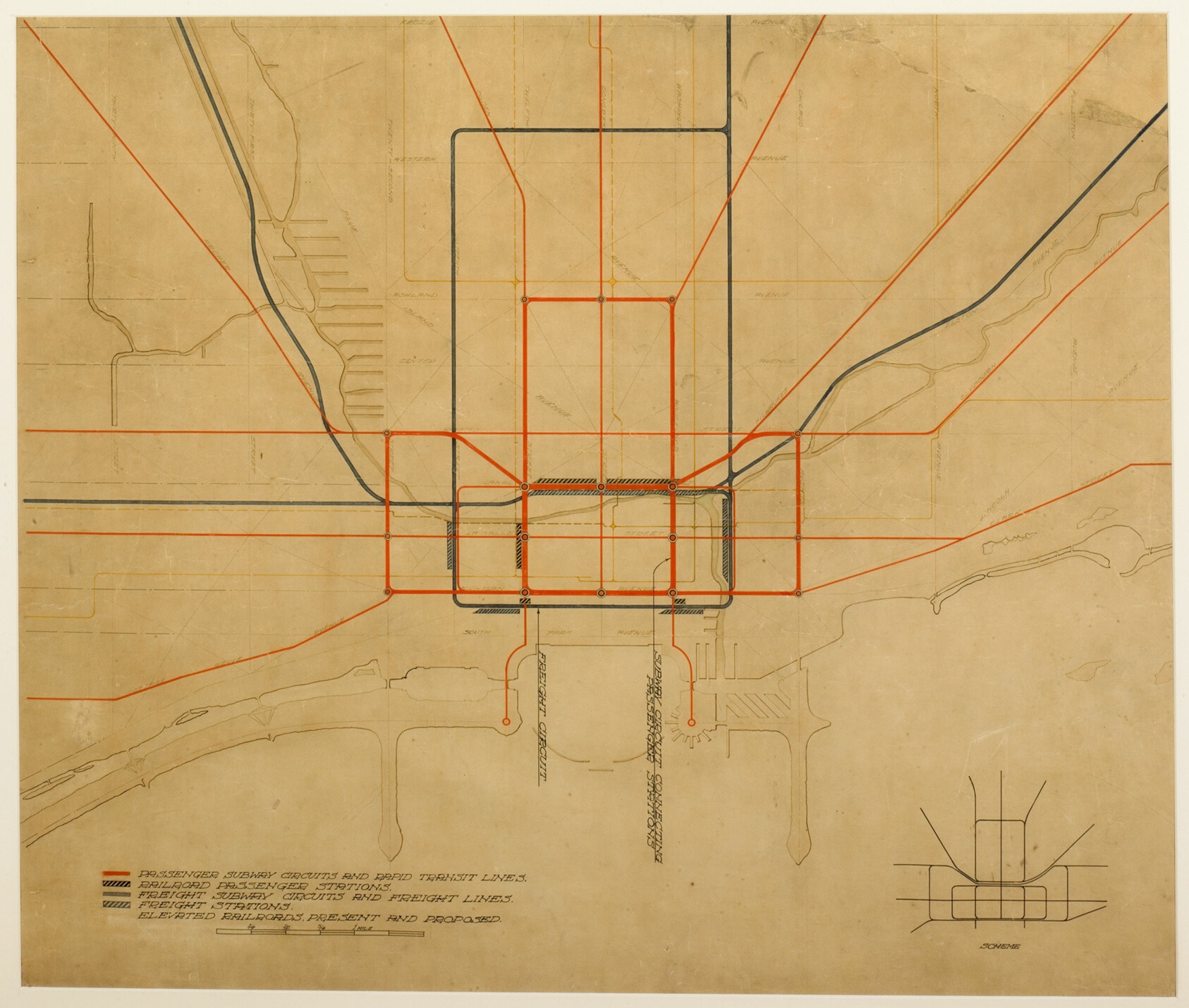
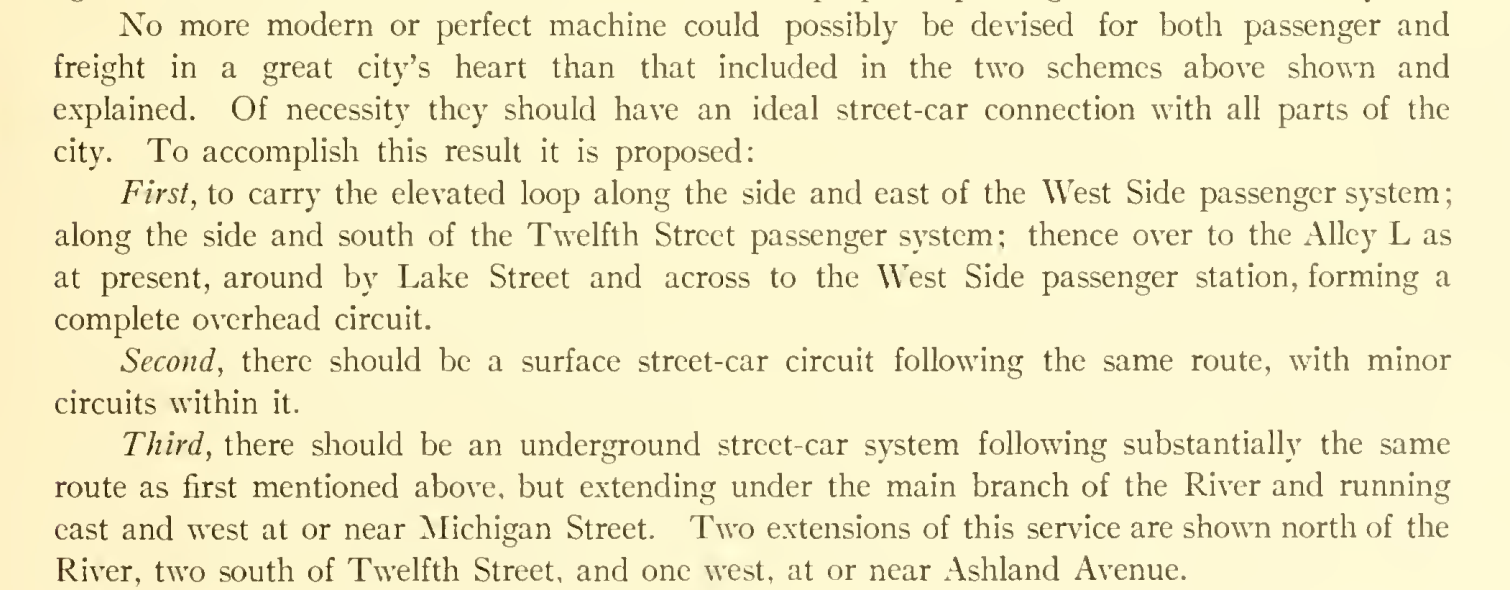
In the end, what the Plan revealed wasn’t just a vision of a more beautiful Chicago, it was a city on the brink of collapsing under its own success. The chaos of overlapping rail lines, congested streets, and an overburdened Loop made it clear that growth without intention had consequences. Separating people from freight, centralizing distribution, and rethinking the movement of both goods and commuters were necessities.
What Burnham and the Commission Club proposed was not simply infrastructure, but control: a way to impose order on a city that had grown too fast to manage itself. And while the price tag was steep, the alternative was steeper, a Chicago that could no longer function as the industrial and cultural powerhouse it was becoming. Before the grandeur of civic centers and lakefront beautification, there had to be a foundation that worked. Because without solving how the city moved, nothing else in the Plan could move forward at all.
Books and Movies
Combining nostalgia and historical detail, David Young tells the colorful story of transportation in Chicago, from the plank roads of the 1850s to the streetcar straphangers of the 1920s to the articulated buses of the 1990s. Illustrated with more than 90 photographs and maps, Chicago Transit reveals the political shenanigans, business deals, and technological changes behind the transportation system that made Chicago "the city that works."
the Development of Chicago's Rapid Transit System, 1888-1932 / by Bruce G. Moffat
Take a trip underground and see how Chicago's "I Will" spirit overcame challenges and persevered to help with the successful building of the subways that move millions today!
While the elevated Chicago Loop is justly famous as a symbol of the city, the fascinating history of its subways is less well known. The City of Chicago broke ground on what would become the "Initial
This is a great list of Chicago history books compiled by the Chicago Public Library
https://chipublib.bibliocommons.com/v2/list/display/901860537/1867262849

Implementation - Encyclopedia of Chicago
1909 Plan of Chicago - Chicago-L.org
Historical Map: The Plan of Chicago – Proposed Arrangement of Railroad Stations, 1909
Landmark Designation Report - Chicago & North Western Railway Powerhouse
The Plan of Chicago - Daniel Burnham and the Remaking of the American City
Plan of Chicago, Chicago, Illinois, Railroad Circuits Diagram
October 6, 1906 -- Chicago and Northwestern Announces New Station
.png)

.png)