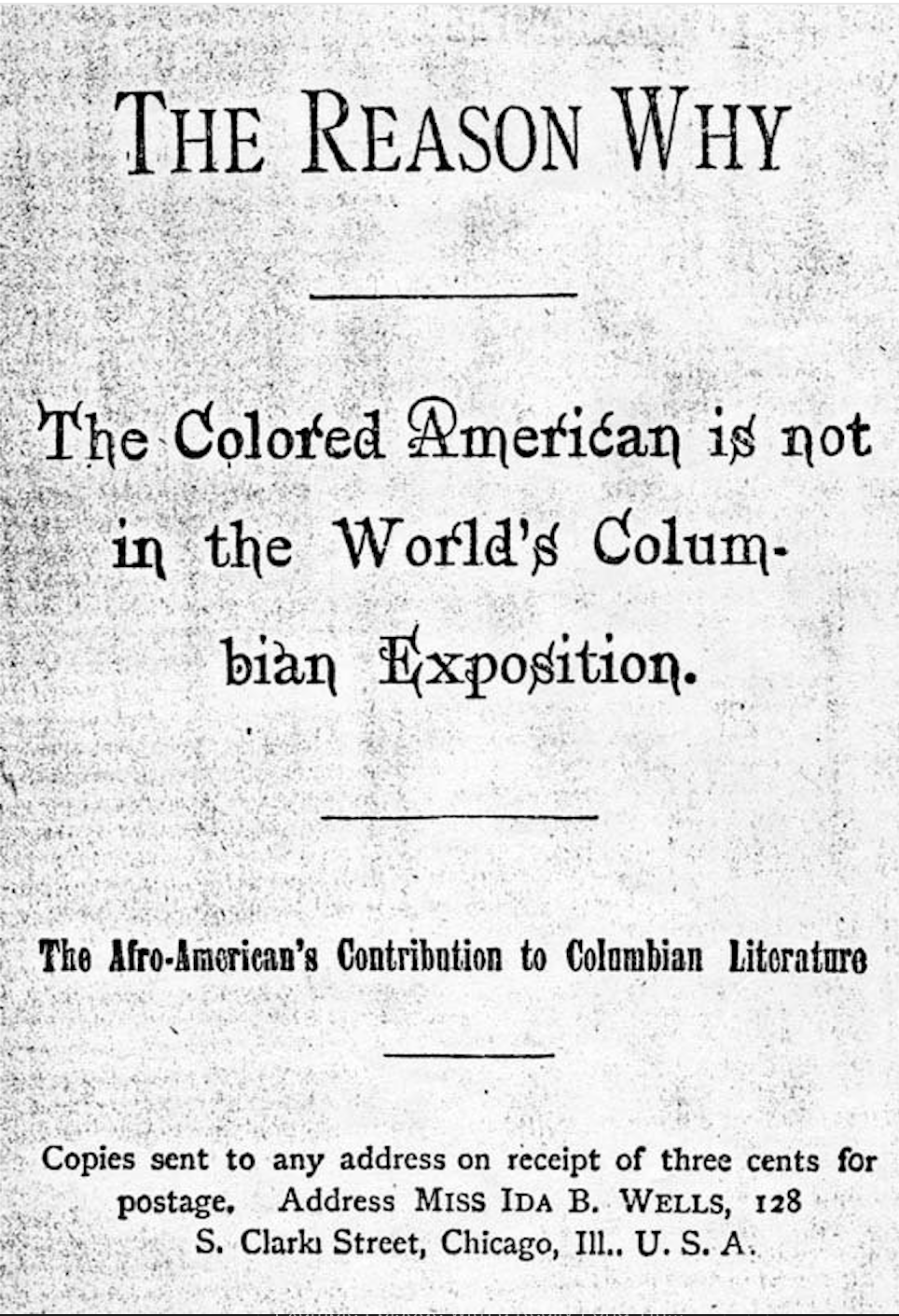
.png)
Have you ever wondered what the lifetime of a Pullman Porter was like? We follow the life of one seemingly average porter and discover some hidden stories that connect all of Chicago
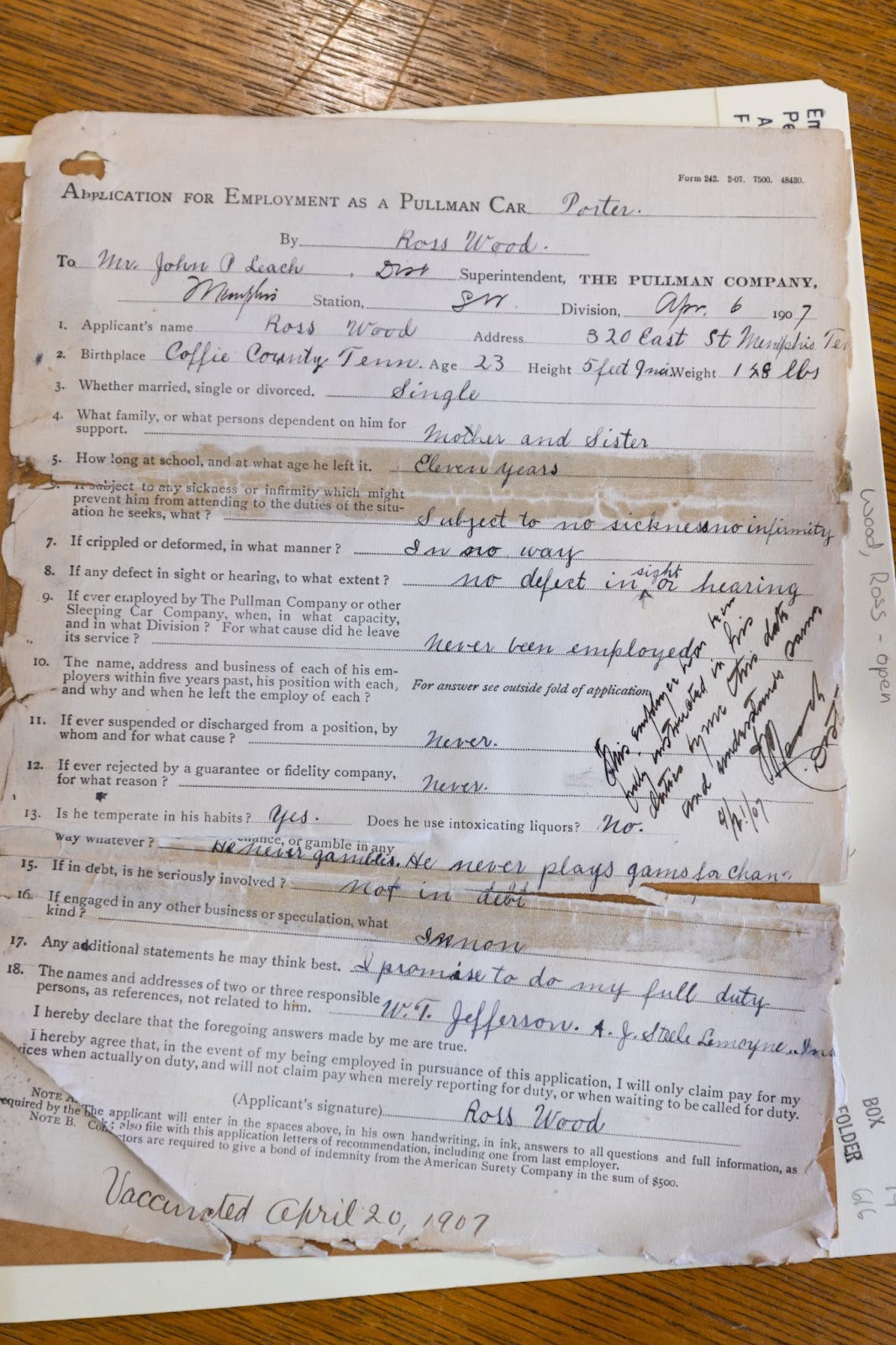
The morning of April 6th 1907, Ross Wood decided to fill out the application to become a Pullman Porter. He was 23 years old, and until this point he has only ever worked as a servant; a “houseboy”. Wood was born to parents that were enslaved not too long before he was born. He thought about how if he had been born just 20 years earlier, he too would’ve been a slave. He wanted to be a porter. It was a respected job among his black peers and even though he would spend his days being demeaned, the $10 a week might’ve been enough incentive.
Wood filled out his application, listing his height and weight, with the box for 'Colored' listed second only to his name.. He listed his health conditions and previous employers. Form 242 was then submitted to the office in Tennessee for review. He waited for days as a clerk in Chicago had to verify all his records, his past employers, and his age.
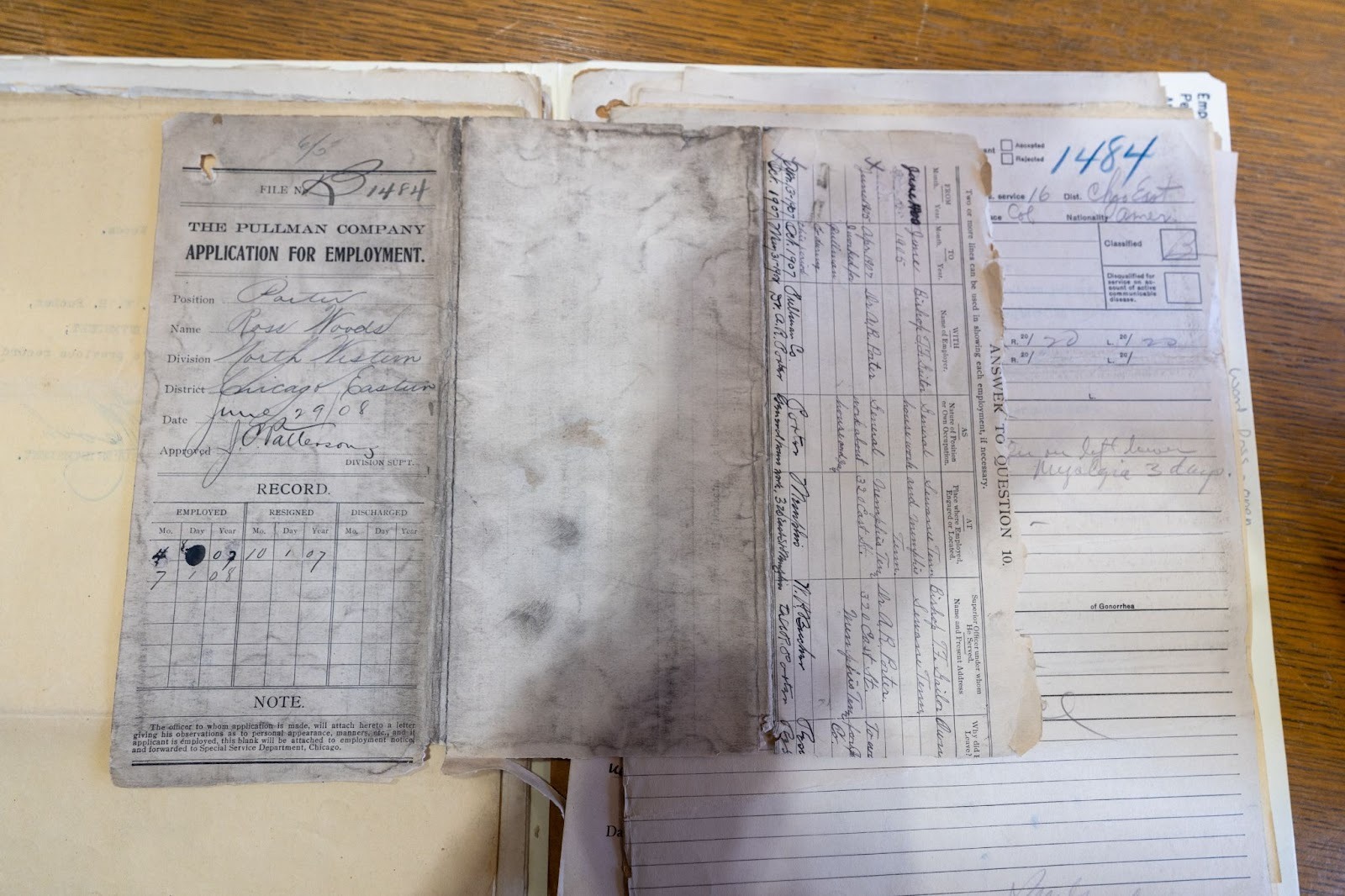
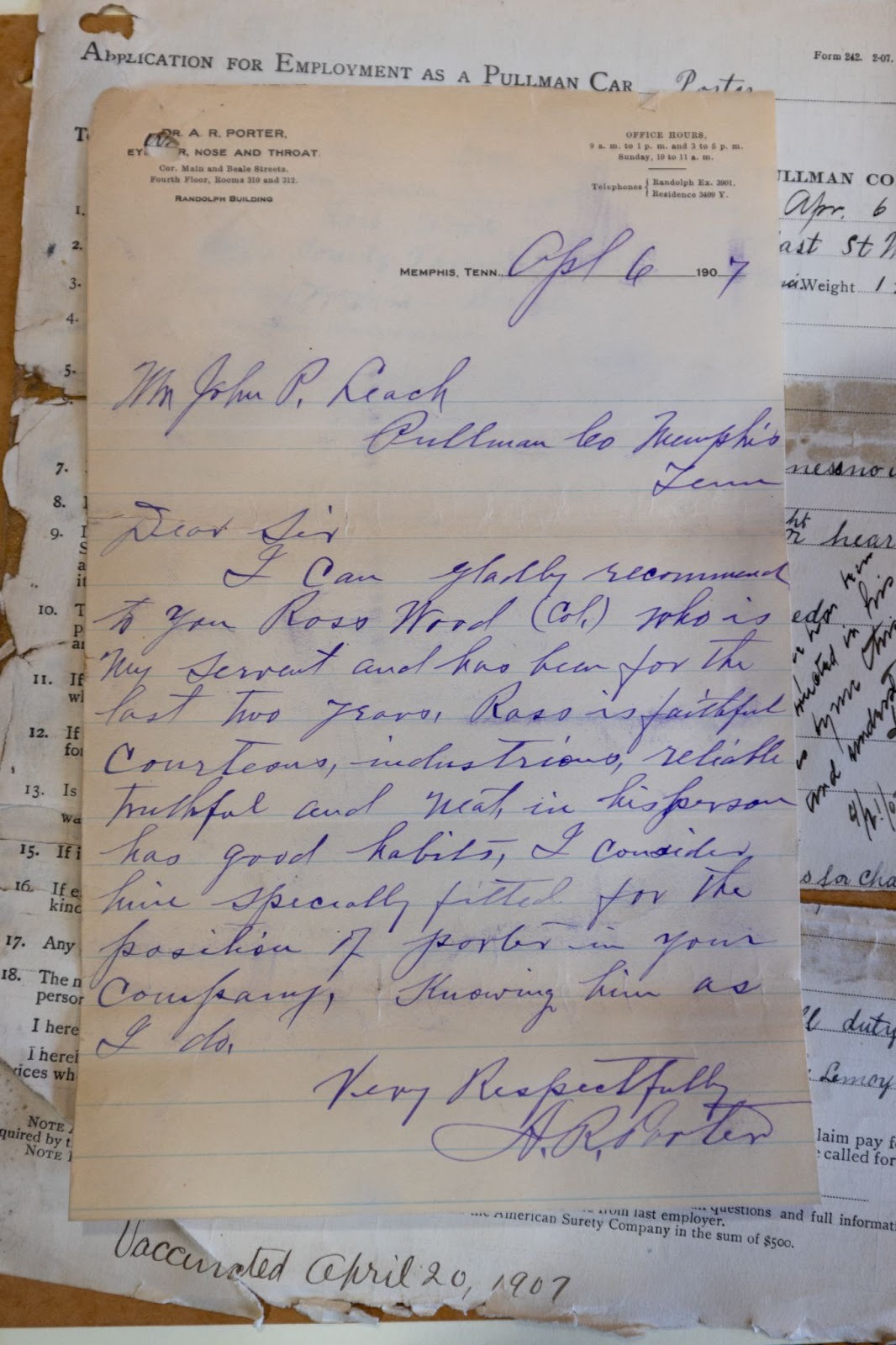
Days later, he was happy to hear that Dr. Porter, his most recent employer, used every positive adjective without coming across as too complimentary; he was a “houseboy” after all. Rev Gailor was also just as generous with his review. His application was rejected even with two affirming letters. He received a notice in the mail the morning of April 10th stating that the office in Chicago couldn’t verify his last employee listed. Wood had mentioned that he worked as a teacher when in fact he didn’t. Everyone lies on their resume. But there’s never any leeway for a black man.
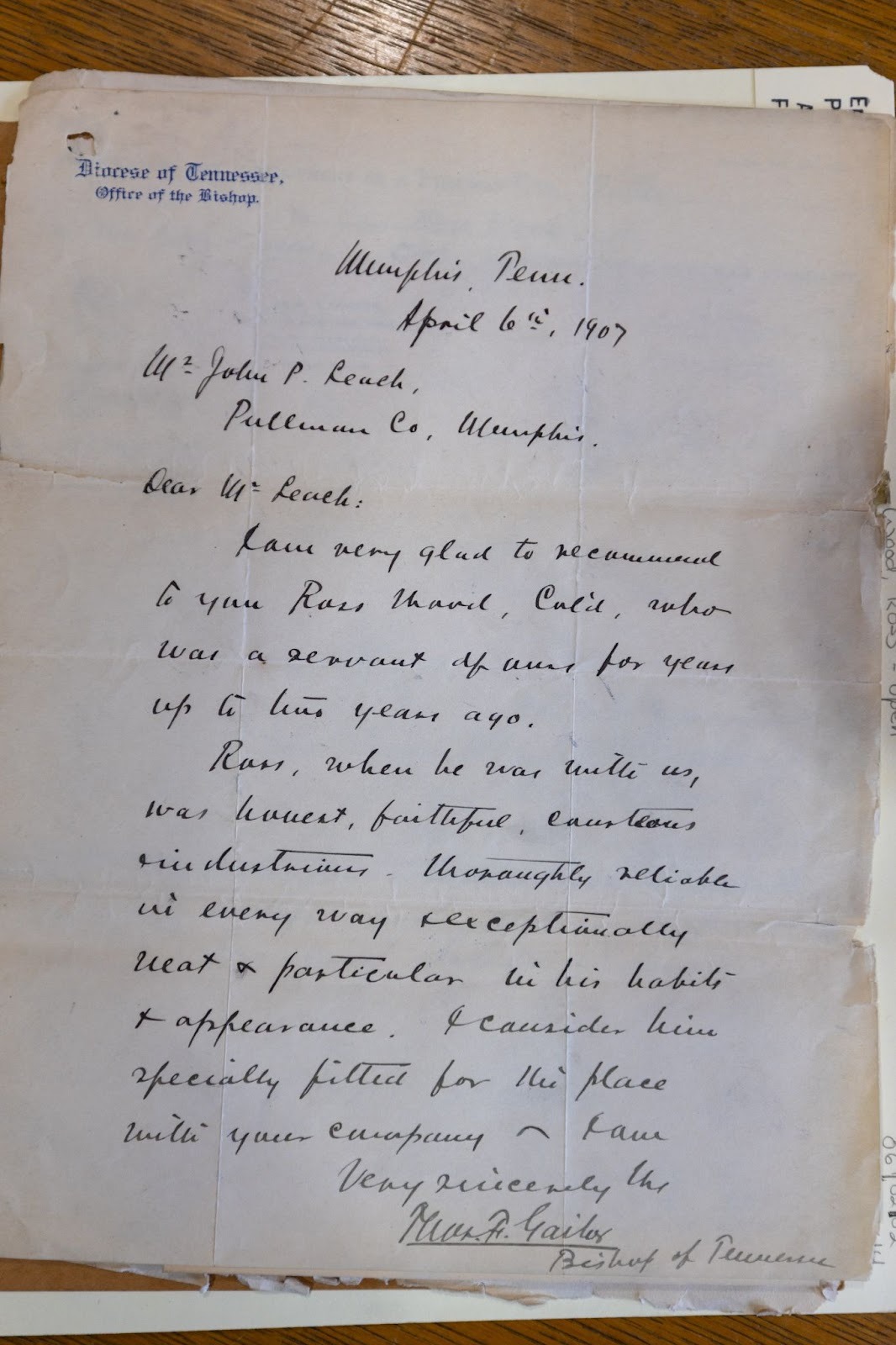
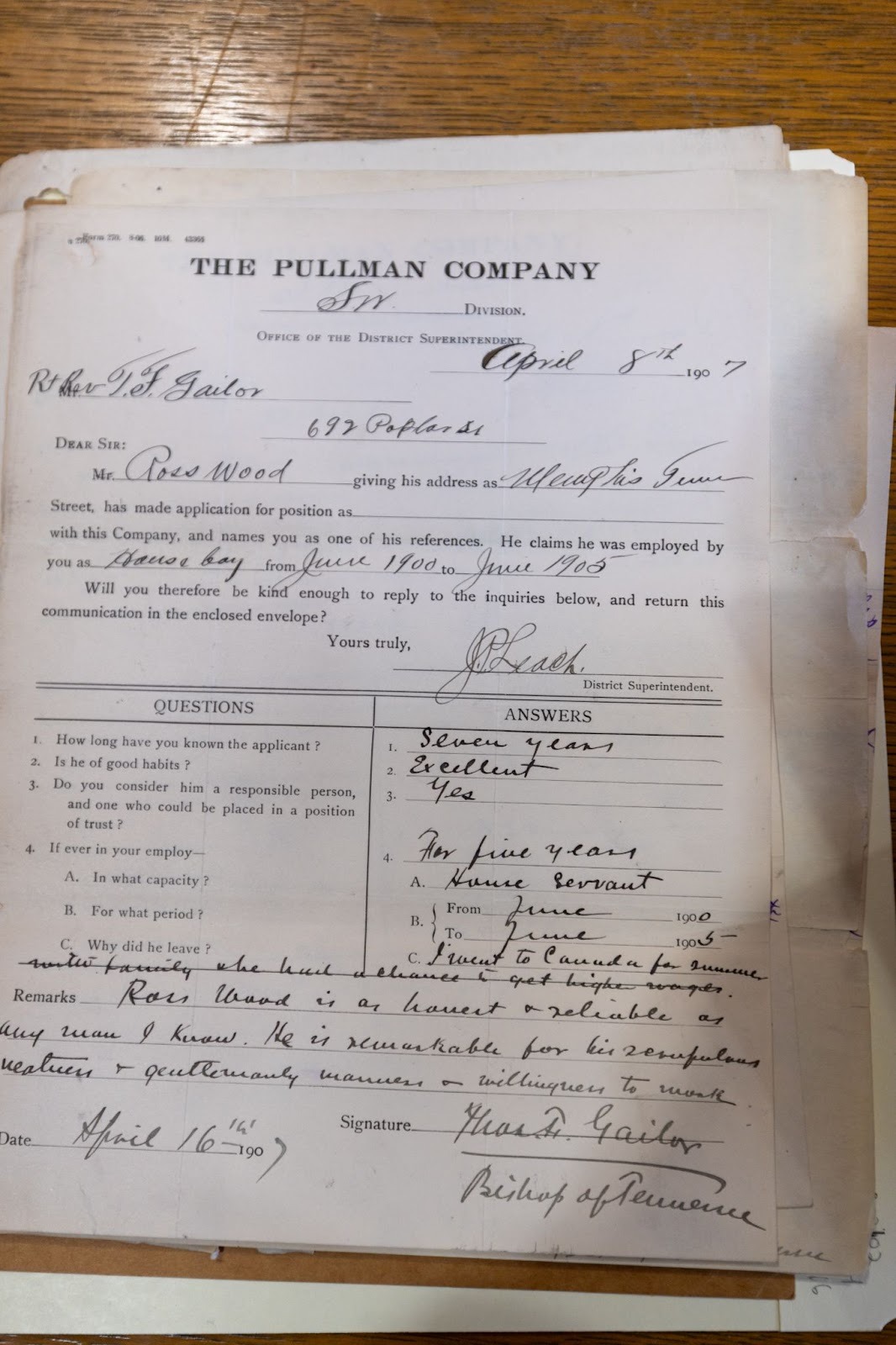
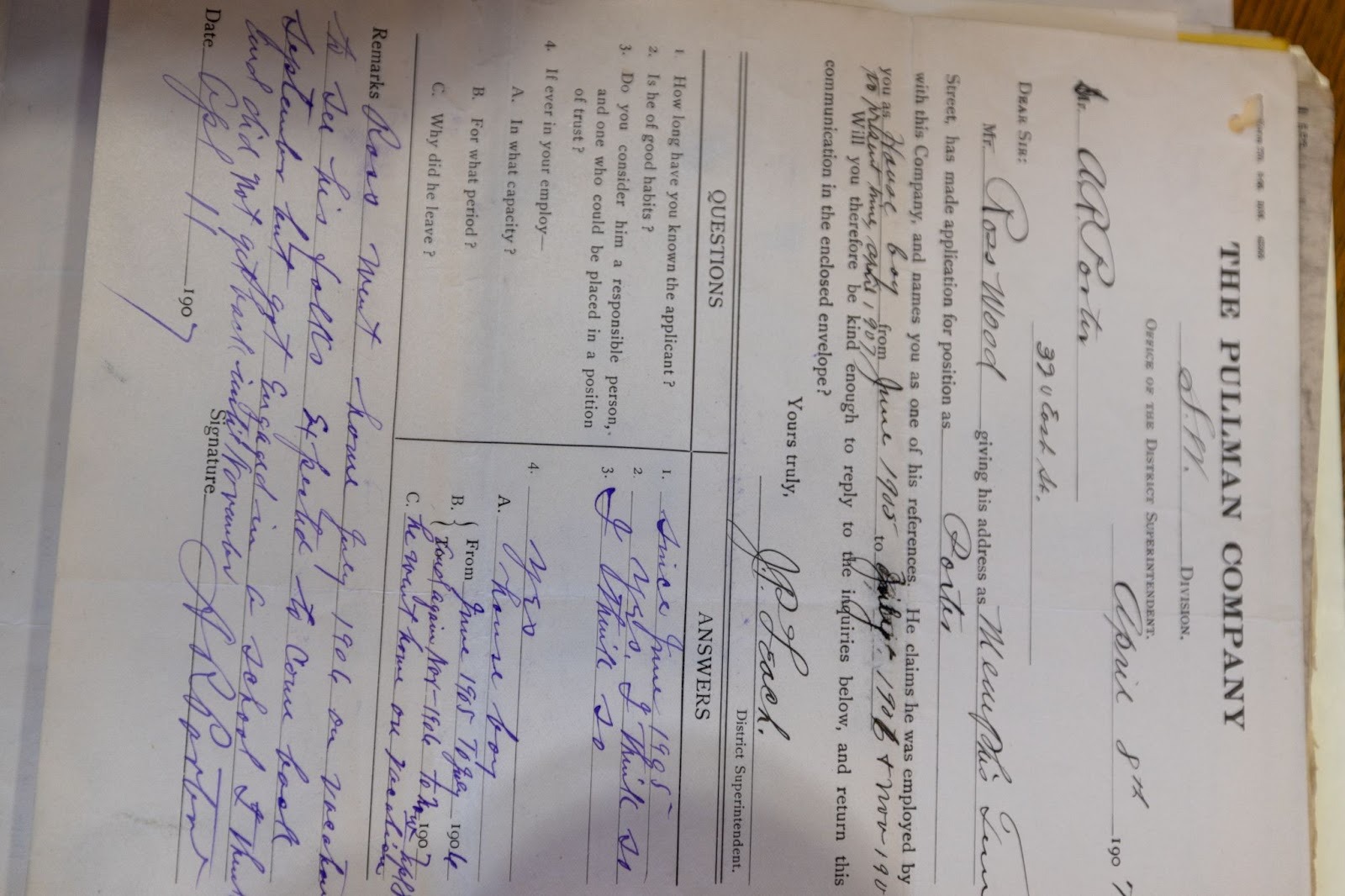
Wood clarified his teacher position and submitted an amended application. The morning of May 5th was a great day, he was accepted and employed effective immediately. Stepping on a luxury train from Tennessee to Chicago was a wondrous experience. The first time felt like he was taking his first breath, until the first passenger arrived, that is. He had heard some stories of how porters were treated but always felt that the positive had to outweigh the negative. Tennessee for a black man wasn’t an ideal location. So the luxury sleeping car felt safer for a while. His first passenger stepped aboard the train and referred to him as George. He attempted a gentle correction stating that his name is Ross Wood, so either one of those two names would do. He thought he finished his sentence but the passenger hadn’t even heard him at all.
For months he was George, but so was every other porter. He was George the same way both his parents were named after their owner. The constant reminder that he was simply property couldn’t be bypassed. He lasted a year and then left.
Wood went on to marry and as he decided to start a family, he had to get back to a stable job. He signed his name on a dotted line and sent in the application once again to become a porter. He was employed effective immediately as of May 1909.
Wood’s life was like every other black man. He had a family, travelled the country as a porter, and eventually transferred to Chicago. He spent decades as a porter. Life went by too fast for Wood, he didn’t have too many dreams but when the Brotherhood of the Sleeping Car Porters came around in the 20’s he was ready to support. He did what he could to support their proposals and any time someone handed him a copy of The Chicago Defender, he carried it down South for other black men to read. He did his part, he lived.
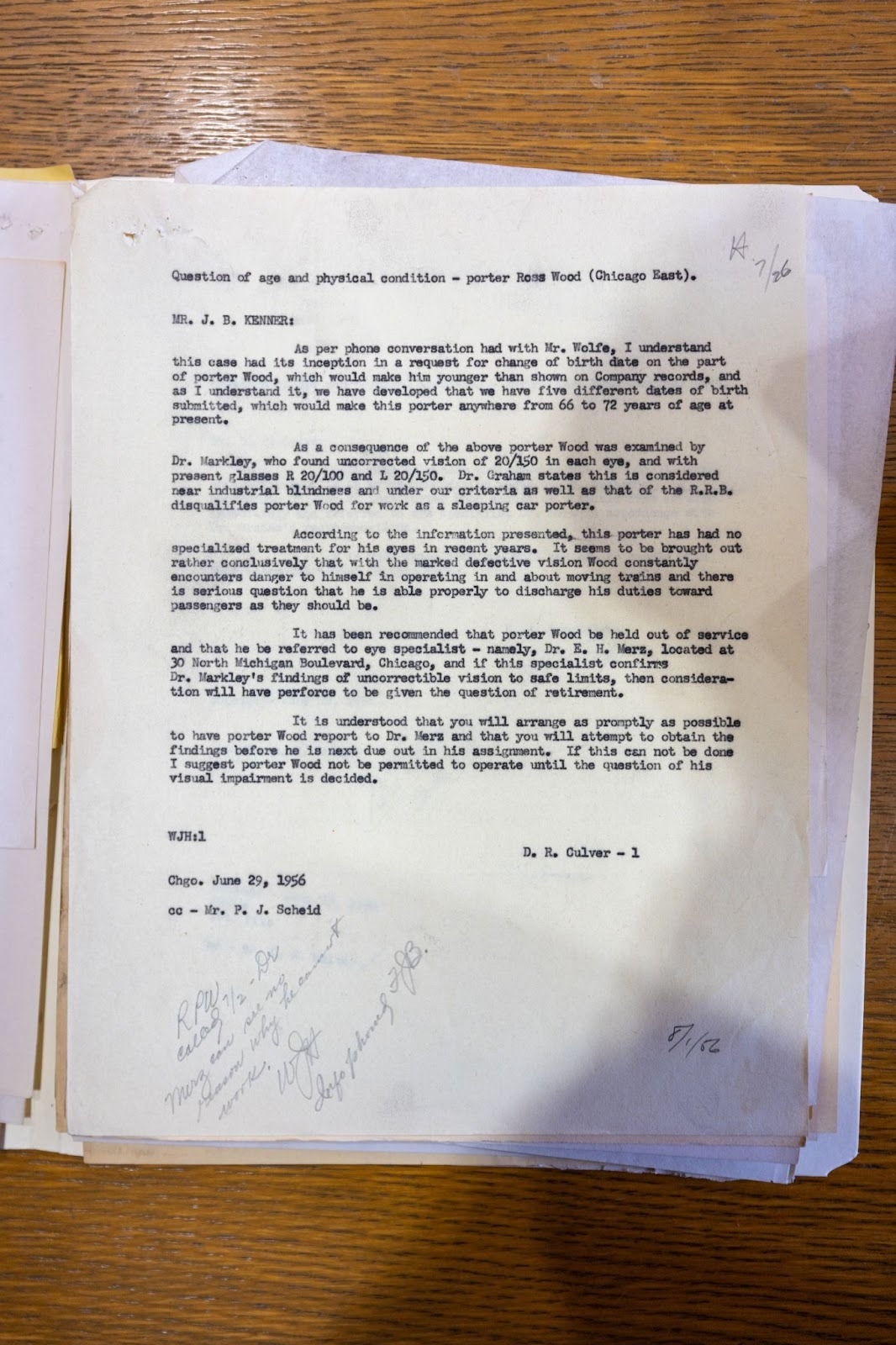
Almost 40 years later, Wood got a letter from the same clerk in Chicago stating that his age came up for questioning. He was about to retire and receive a pension when they confirmed that his birthday was actually in 1888 not 1884. Wood took the medical exams, the fitness tests and whatever else was needed to prove his age. Dr. Meiofjo sent him a letter saying that he was no longer fit to work because his eyesight was just that bad. He stopped by the office of a specialist; Dr. Earl Merz. The Merz family had been in medicine for generations. His grandfather was a pharmacist and opened up Merz apothecary in 1875, his dad then also became a pharmacist and he, an optometrist. It was part of his job to examine the porters and confirm they are good to continue work.
Wood walked into Dr. Merz’s office on 30 N Michigan Ave and sat down in the waiting room. The building overlooked the lake. He realized he hadn’t looked at the lake in a while and he had definitely never seen it from this high up. He was escorted into the exam room. Standing by the window, the lake looked never ending. He drifted away thinking about his family, all the places he’d seen, and how often he wished for a day off in the city. Thoughts were quickly interrupted by Dr. Merz who went on to perform the exam. He assured Wood that his eyesight is good enough for him to keep working but he would have to come back for frequent checkups due to early cataracts, which had no cure, this early in the diagnosis.
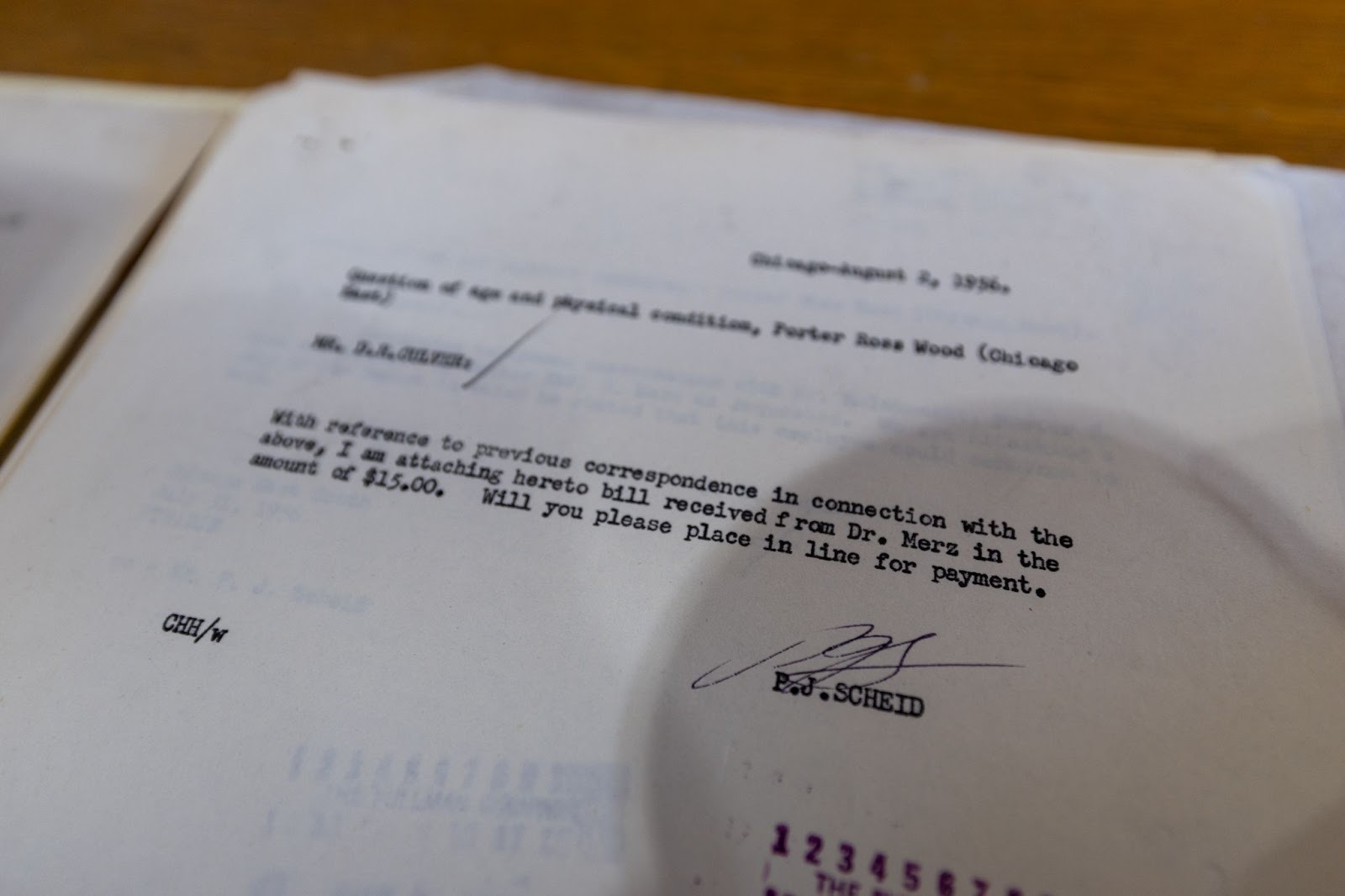
Those visits every few months became almost enjoyable. Wood took his time getting to the office. He would walk along the lake and make his way up Michigan Ave. At one of the many visits, Dr. Merz confirmed that the cataracts were advanced enough that Wood would have to get surgery. Of course, he had no choice. He recovered and was quickly back at work.
Not too long after, Wood retired. He needed the rest. His family wanted him to spend more time in Chicago. He had also heard about a young man that came in for twelve and a half hours, just to watch how the employees were treated. He wanted to fight for their rights. For all their rights. Malcolm White was a disruptor in the best way. Wood would later watch him bring light to the mistreatment of black people across the country. He fought for the freedom, civil rights, and respect they deserved. He did it under the name Malcom X.

Labor Union Negotiation and Agreement Files, 1920-1969. 1920.
Pullman’s Palace Car Company. Employee Indexes and Registers, 1875-1946. 1875.
Application and Service Files, 1900-1964. 1900.
United States Railroad Administration. Union Contract Agreement Books, 1919-1958. 1919.
https://jimcrowmuseum.ferris.edu/question/2021/august.htm