
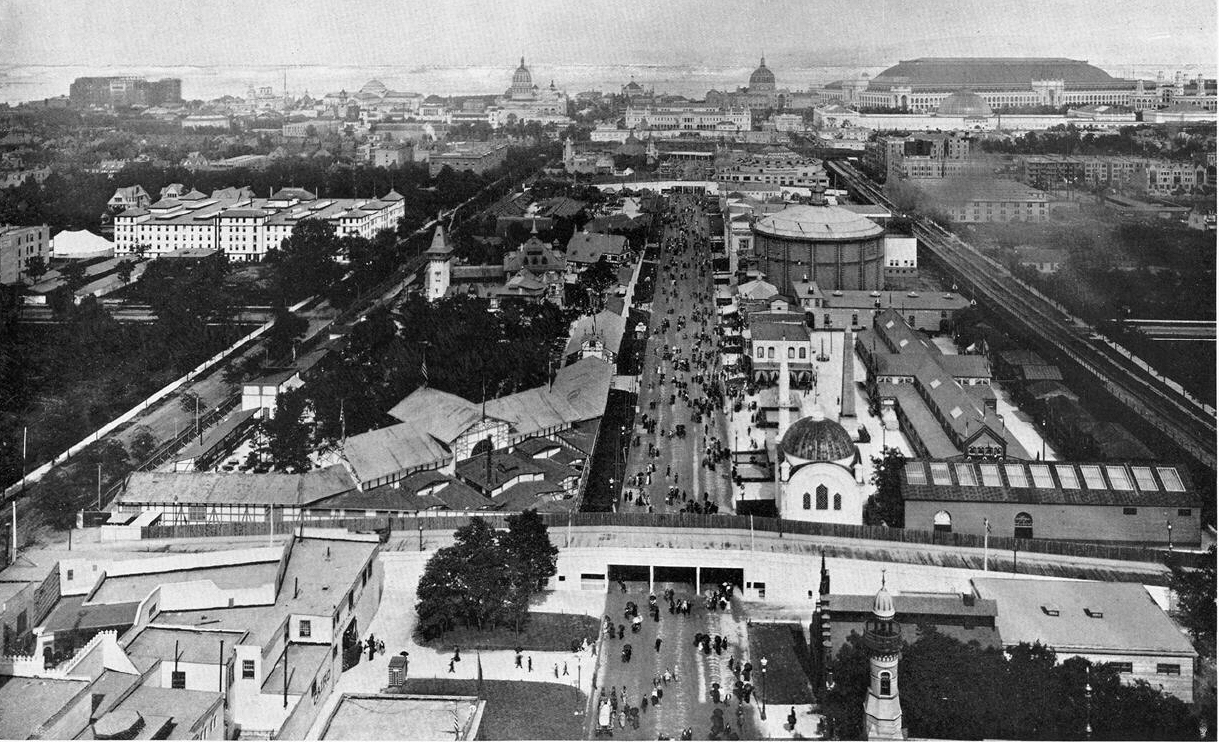
Let's visit the Midway!
The last few weeks we spent time diving into the fantasy that was the World’s Columbian Exposition. This has always been an event that I would do anything to go back in time to attend. In reality, if I existed as myself all the way back in 1893, there’s no way I would’ve attended the Fair. At best, I would’ve been on display at the Midway.
“The Midway Plaisance is sort of a curiosity-shop, in which the curiosities are mainly men and manners.” - Julian Hawthorne, “The Lady of the Lake,” Lippincott’s Magazine, Aug 1893.
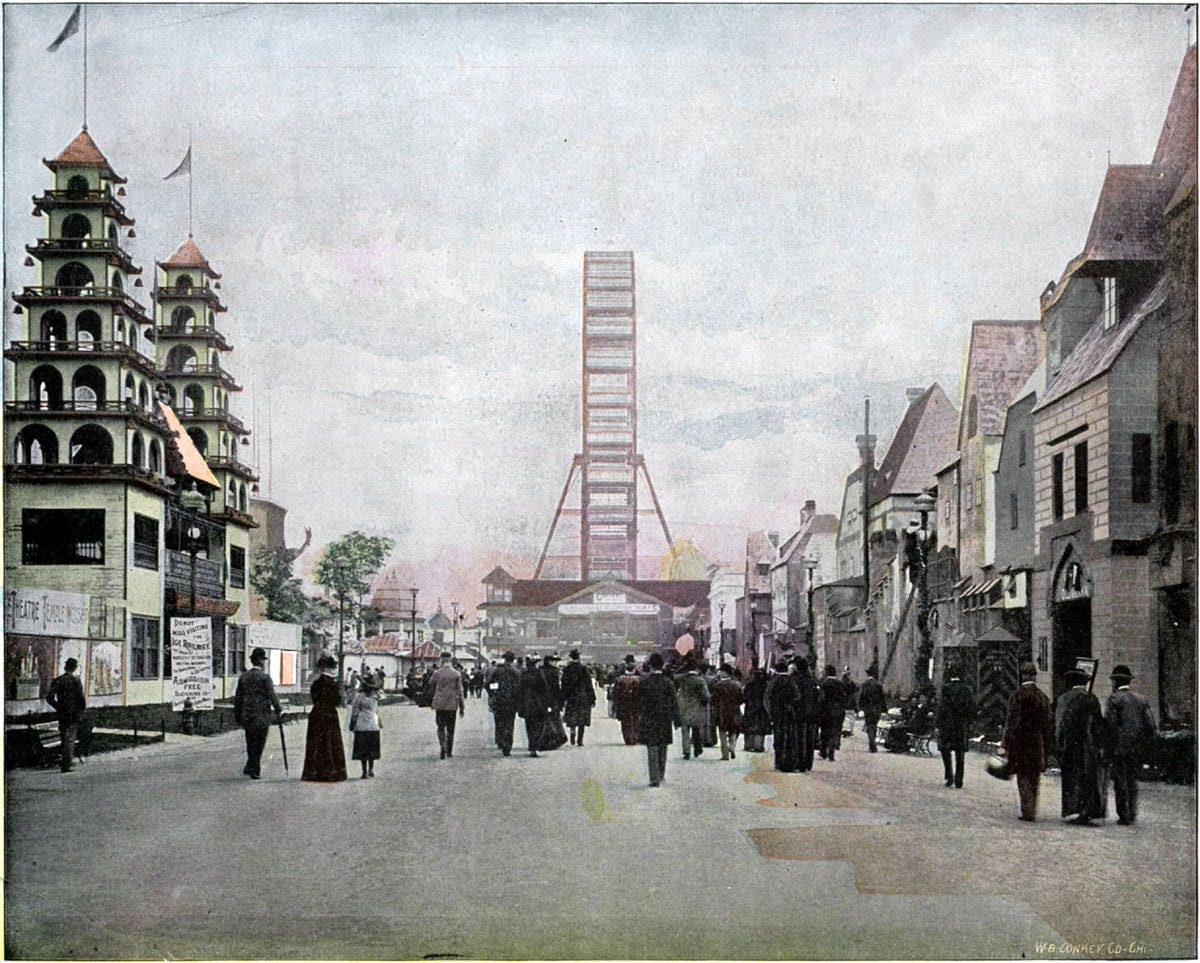
When the Fair was in its infancy, there were no plans to showcase ‘oddities’. The experience at the Fair was meant to be ‘high culture’ (you don’t need me to define what that is in the terms of 1893…). After looking into the success of the 1889 Paris World’s Fair and how the side shows brought so much revenue, the Fair Commissioners reconsidered their decision. Fredric Putnam was hired as the director and he assigned Sol Bloom as the impresario of the Midway. Twenty three year old Bloom was adamant to prove himself worthy of this position.
The Midway was meant to be a living museum of human evolution with its sole purpose being the advancement of the racist ideas of Social Darwinism. This wasn’t meant to be entertaining, it was putting other people on display; specifically groups that were considered less civilized. The layout was so blatant with its categorization of peoples, that the layout of the villages, booths, and bazaars was from most to least ‘civilized’ or what the coordinators thought was close to being American. I also thought it was interesting that the Women’s Building was the closest to the entrance of the Midway.
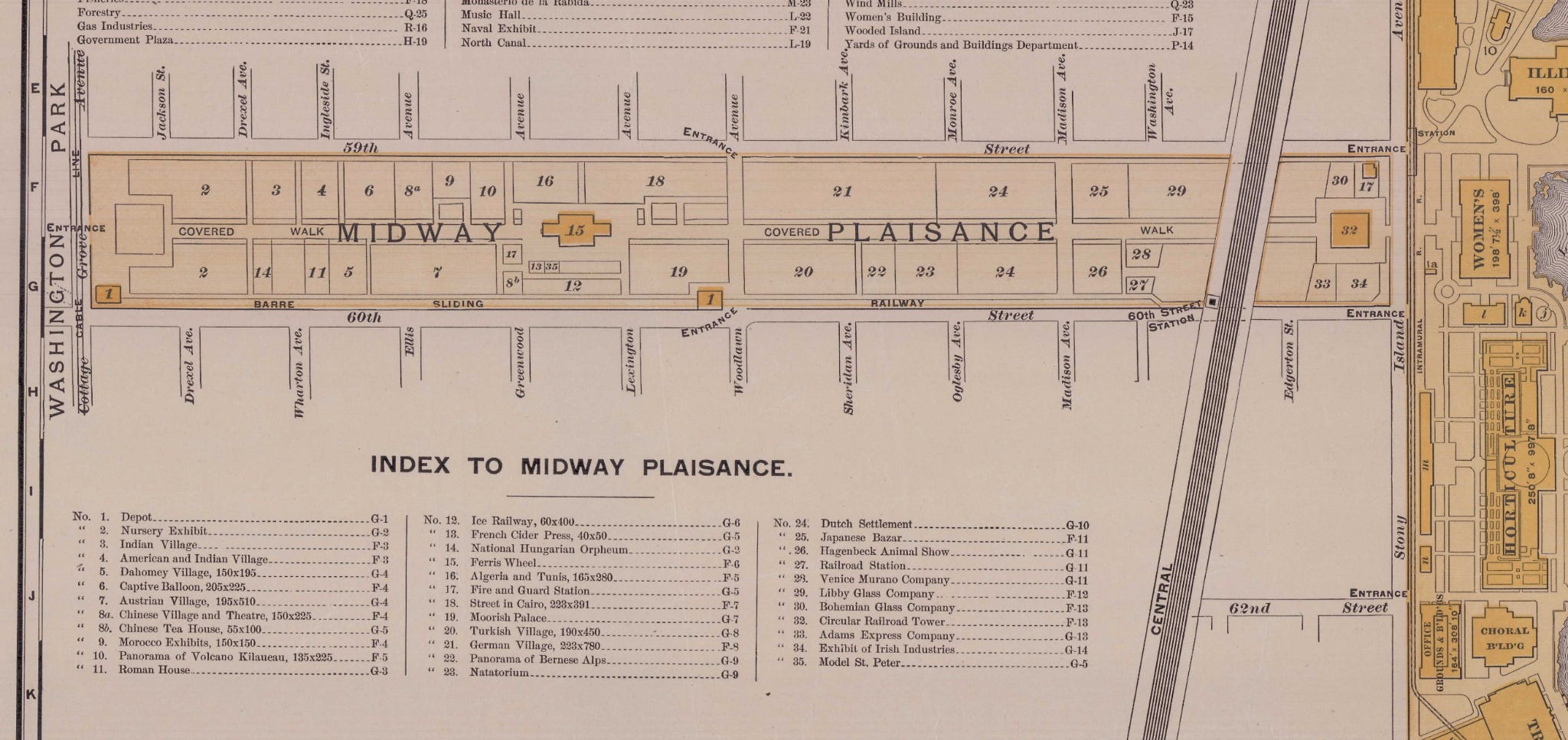
“An opportunity was here afforded to the scientific mind to descend the spiral of evolution, tracing humanity in its highest phases down almost to its animalistic origins.” - Through the looking Glass” Chicago Tribune 1 Nov 1893
From the experience of those who attended, the Midway was the most chaotic fun! It was lined with inhabited villages from countries that most attendees had never seen or would probably never get to see. The Ferris Wheel was the highlight of any day on the Midway! The Streets of Cairo was one of the most popular and most controversial villages. The articles written by one of the attendees, Julian Hawthorne, described them as dirty. This description is in no way shocking, and is a glimpse into what the experience was like for nonwhite folks.
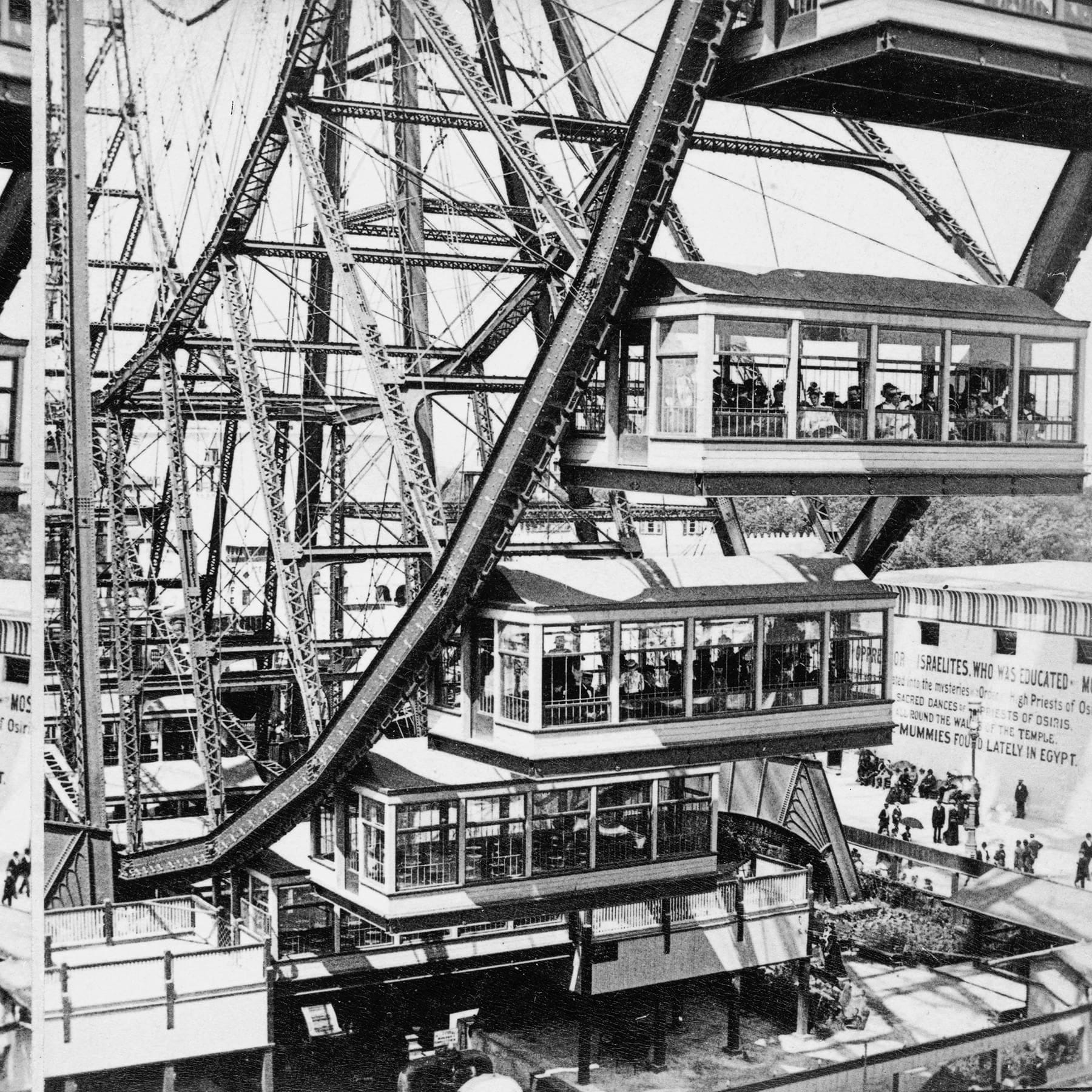
“We Westerners cannot help being interested in Turks, Arabs, Numidians, Cingalese, Javanese, Syrians, and even in Chinese and Japanese, when they are not naturalized American citizens, or “cheap labor.” There are plenty of all these here, in their own dirty, beautiful costumes; with their brown faces, their dark, shining, impenetrable eyes, their queer shoes, sashes, caps, turbans, their shrugs and gestures, their incomprehensible grunts, gutturals, gurglings, clucking, and chattering.” - Julian Hawthorne, “The Lady of the Lake,” Lippincott’s Magazine, Aug 1893.
Although in today’s world the Midway would never exist in the same way, at the time, this was a revolutionary experience. The word Midway entered the lexicon of the English language and went on to be used as a descriptor of the grounds of a fair. It also completely changed how amusement parks were made. People had never experienced something that was meant to grab their attention in this way; no matter where you turned, there was something to see or hear.
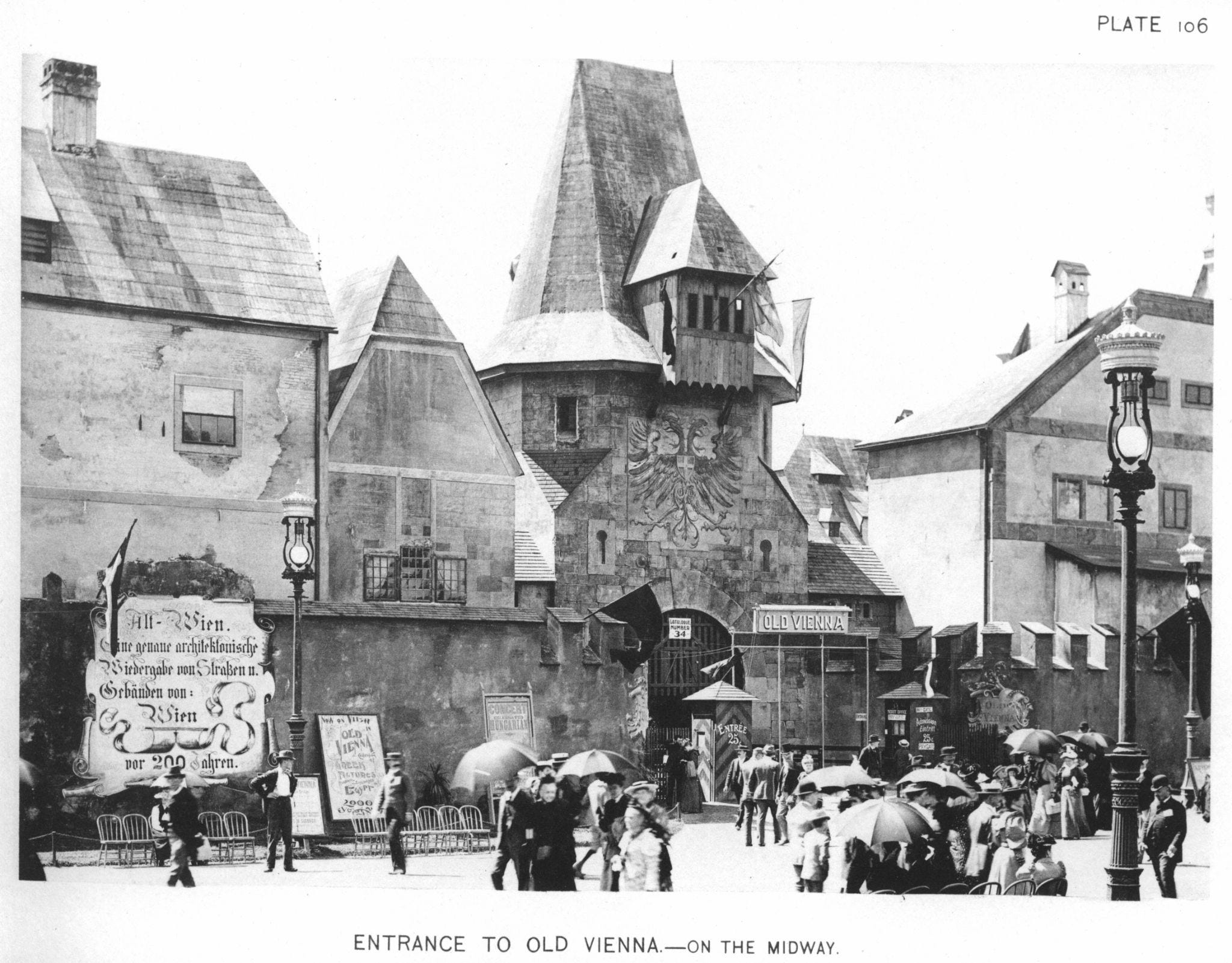
The Midway remains one of the most fascinating contradictions of the World’s Columbian Exposition. It was a place of wonder and discovery for millions of visitors, yet it was built upon a framework of prejudice and hierarchy. The same avenue that introduced Americans to new foods, music, architecture, and cultures also reduced entire groups of people to exhibits in a human spectacle designed to reinforce ideas of Western superiority.
The Midway transformed entertainment, introduced new forms of amusement, and reshaped how fairs, amusement parks, and public attractions would be designed for generations. It sparked curiosity about the wider world, even if that curiosity was filtered through the distorted lens of 1893.

The World’s Columbian Exposition: The Midway by Dr. Kimberly Kutz Elliott
The Midway Plaisance - Interactive Map
Chicago 1893 Midway Plaisance By Ricardo Gonzalez
The World’s Columbian Exposition of 1893: The White City, Midway Plaisance, and Ferris’ Wheel
Exhibits on the Midway Plaisance, 1893
THE LADY OF THE LAKE by Julian Hawthorne Part III: Curiosities of the Midway Plaisance
Chicago in 1893: Selected Maps of the World’s Columbian Exposition
How Chicago’s Midway Plaisance Set the Stage for Modern Day Amusement Parks
The 1893 Chicago World’s Fair – A Shining Time For Cornet Soloists
.png)
.png)
